

Green Shooting: Is Your Production Running Green?
8 quick wins to make your video production more sustainable.
Sustainability may not yet be the deciding factor in video productions, but it plays an increasingly important role for us - especially with clients in public administration or younger agencies with a corresponding agenda. If your own ecological conscience isn’t motivation enough, you’ll certainly pay attention when investment heavyweight BlackRock once again denies any future viability to companies without ambitions for climate neutrality and waste reduction. In any case, it’s worth giving this some thought and seeing what can be implemented in your own company.
What Does Saving the World Cost?
We have committed to implementing our projects as ecologically sustainable as possible and reducing the carbon footprint of our productions. However, it’s also important that our clients play along, otherwise the additional costs will blow the budget.
In our collaboration with the German Federal Ministry for the Environment (BMUV), for example, we have been developing ideas since the beginning of our contractual partnership to simplify the resource-efficient use of technology for in-house events. This includes new lighting architecture for daytime and evening events as well as a special focus on selecting sustainable and reliable media systems with efficient energy consumption.
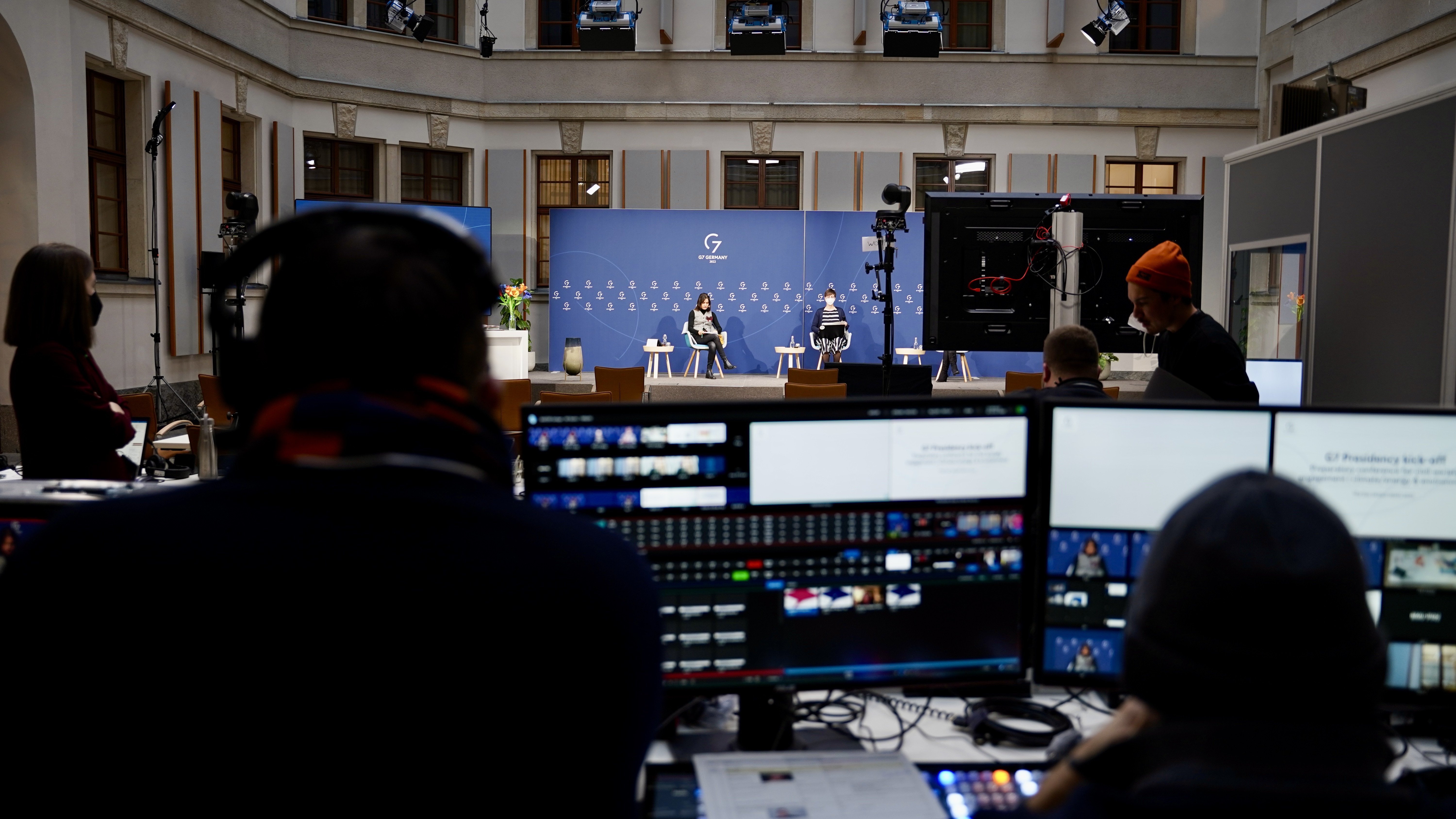
Since 2017, we have been a permanent contractual partner and think tank for sustainable productions for the BMUV
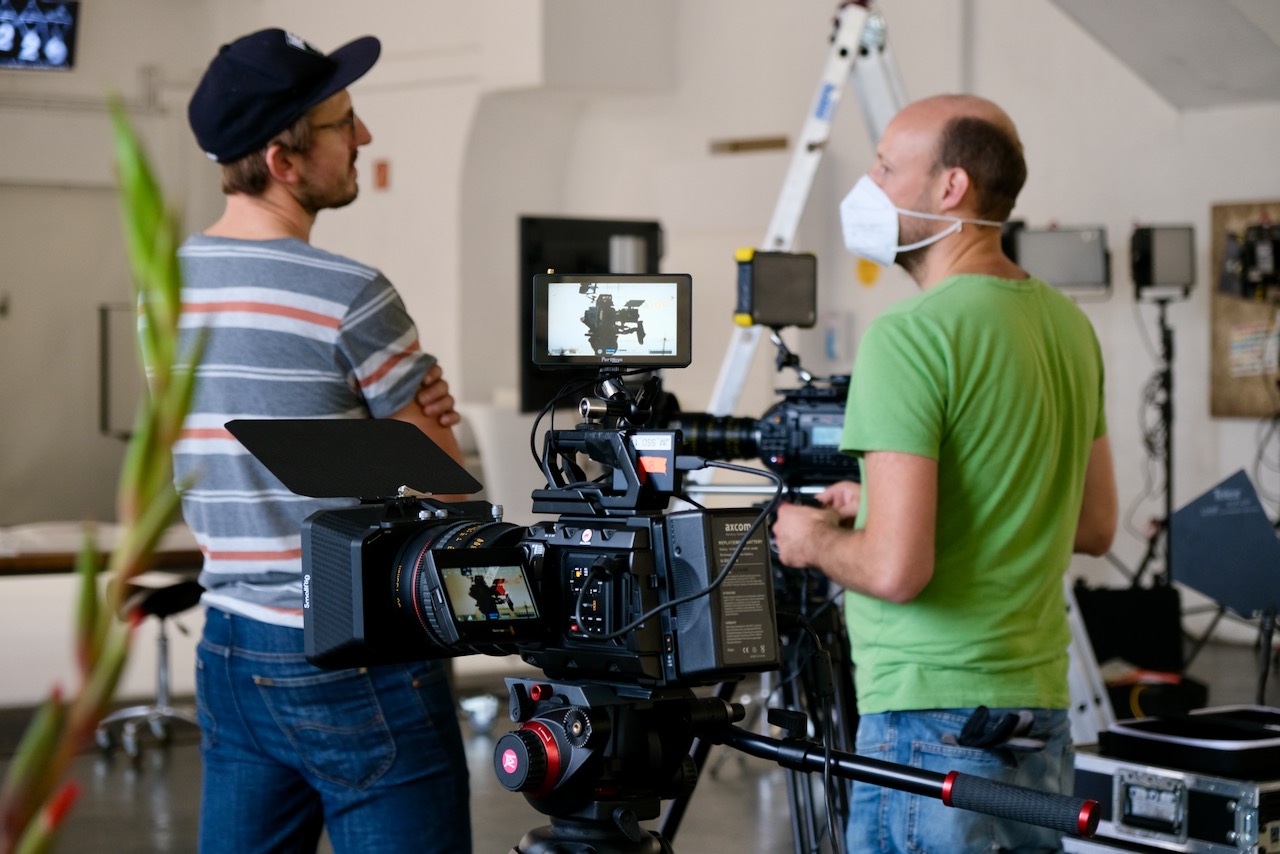
In this process, we learned a lot from our partners that can also be applied to film and video productions. Shootings can cause high CO2 emissions because the technology, depending on the setup, is energy-intensive and waste is generated on set, the disposal of which is more complicated, especially at external locations. Additionally, protagonists, crew, and equipment often need to be transported to multiple shooting locations and supplied there.
We’ve compiled our Top 8 Quick Wins here, which are easy to implement from both an economic and environmental perspective.
Top 8 Quick Wins for Green Shootings
1. Green Electricity
Switching to sustainably produced power supply is probably one of the most accessible steps toward resource-efficient production. In all the spaces we use - studios and office spaces - we source certified green electricity from Naturstrom. At temporarily used shooting locations, the availability of green electricity is sometimes a deciding criterion.
If the location is outdoors and no grid connection is available, diesel generators should be avoided in any case due to their high emission levels. We then prefer mobile power storage systems charged with green electricity and solar generators. In case of doubt, we first check whether an alternative shooting location might be an option.
2. Battery Operation
Resource conservation starts with purchasing. To avoid waste and, in this specific case, hazardous waste, we pay attention to energy consumption and the longevity of rechargeable batteries when purchasing batteries and battery-operated devices. These should also be recyclable.
Disposable batteries may not be used during the entire production period, neither in the office nor on set. Our technical maintenance team ensures the proper disposal of damaged or non-functional batteries.
3. Lighting
Energy-efficient lighting can save not only a large portion of costs but above all emissions. That’s why our premises - office spaces, kitchen, restrooms - are equipped with LED lights, just like our control room and greenscreen studio.
For studio productions, we exclusively use LED spotlights or other light sources with comparable efficiency. This practice will be mandatory from 2024 onward. But we also ensure appropriate equipment for outdoor shoots.
As a general principle, we handle energy responsibly. Rooms are only lit when they are in use. Studio lighting is only kept on permanently during lighting tests and during production.
4. Travel and Transport
On Berlin’s streets, we run entirely on electricity: Our employees use public transport for commuting to productions in and around Berlin. The subsidy for the environmental ticket or a corresponding amount for cyclists is added to their salary.
A plug-in hybrid company car is available for transporting heavy equipment to external shooting dates, which is used exclusively in electric mode and charged with certified green electricity on our company premises.
For film productions with disproportionately long travel times, we rely on our nationwide network of partner agencies and outsource part of the production or shoot remotely. Domestic and international flights are generally not permitted if the corresponding train journey would take less than eight hours.
5. Paper and Waste
Waste generated at any production site - including external studios - must be separated at minimum into paper, glass, plastic, and organic waste, and disposed of in the appropriate bins.
As a general principle, however, we try to avoid waste from the point of purchase. We have eliminated or replaced the use of paper in all forms with a recycled content of more than 90 percent. Communication and filing are entirely paperless, except where the legislator requires printouts for documentation purposes.
Reusable, digital or physical whiteboards are used for concept phases, while cloud-based solutions enable shared data management and communication during creation and production.
6. Catering
The choice of food can easily become the largest CO2 factor in a major production. For catering to crew and guests, we therefore work exclusively with catering service companies that meet our high sustainability standards and offer their menus largely as regional, seasonal, fair-trade, and organic.
When selecting dishes, we prefer the vegan or vegetarian option. We only resort to meat and dairy products at the specific request of clients. Regardless of our guests’ culinary preferences: minimizing food waste is of fundamental importance to us. Through needs-based food service, for example portioned in jars rather than on platters, we can prevent food from being thrown away.
To avoid waste, we entirely forego disposable tableware - paper plates, plastic cutlery, or cups. We typically rely on green caterers such as Butterstulle and Genussboten from Berlin, who deliver dishes, cutlery, and coffee cups for a small surcharge and pick them up again later. Beverages are provided exclusively in reusable bottles.
7. Remote Production and Formats
Driven by the difficult shooting conditions during the lockdown phases of the past two years, we focused on the development of remotely produced formats for Virtual Events and Video Productions and identified considerable potential for reducing our carbon footprint.
For content-driven formats such as interviews or short portraits, we transmit video signals via LiveU technology from our protagonists in Hamburg, Kyiv, or Mexico City to our studio in Berlin. That’s where the material processing begins. This saves CO2 emissions that would otherwise be generated by travel, hotel stays, etc.
In the other direction, productions work in our greenscreen studio, where we equip talk rounds, interviews, or hosted magazine shows with matching virtual 3D backgrounds in post-production. This compresses shooting schedules - we film entire series in a single day without having to transport equipment, props, catering, and crew to external locations.
8. Green Consultants
Upon completing a multi-day training program, two members of our team will take on the role of Green Consultants in the coming weeks.
They will accompany our productions from the concept phase through post-production, monitor the introduction and compliance of resource-efficient standards, conduct regular evaluations of our projects, and continuously develop our Green Shooting concept.